
20 questions to ask your parents at Thanksgiving
Twenty questions sorted from easy to deep, plus who asks, when to stop and how to record answers, with printable cards for the table.

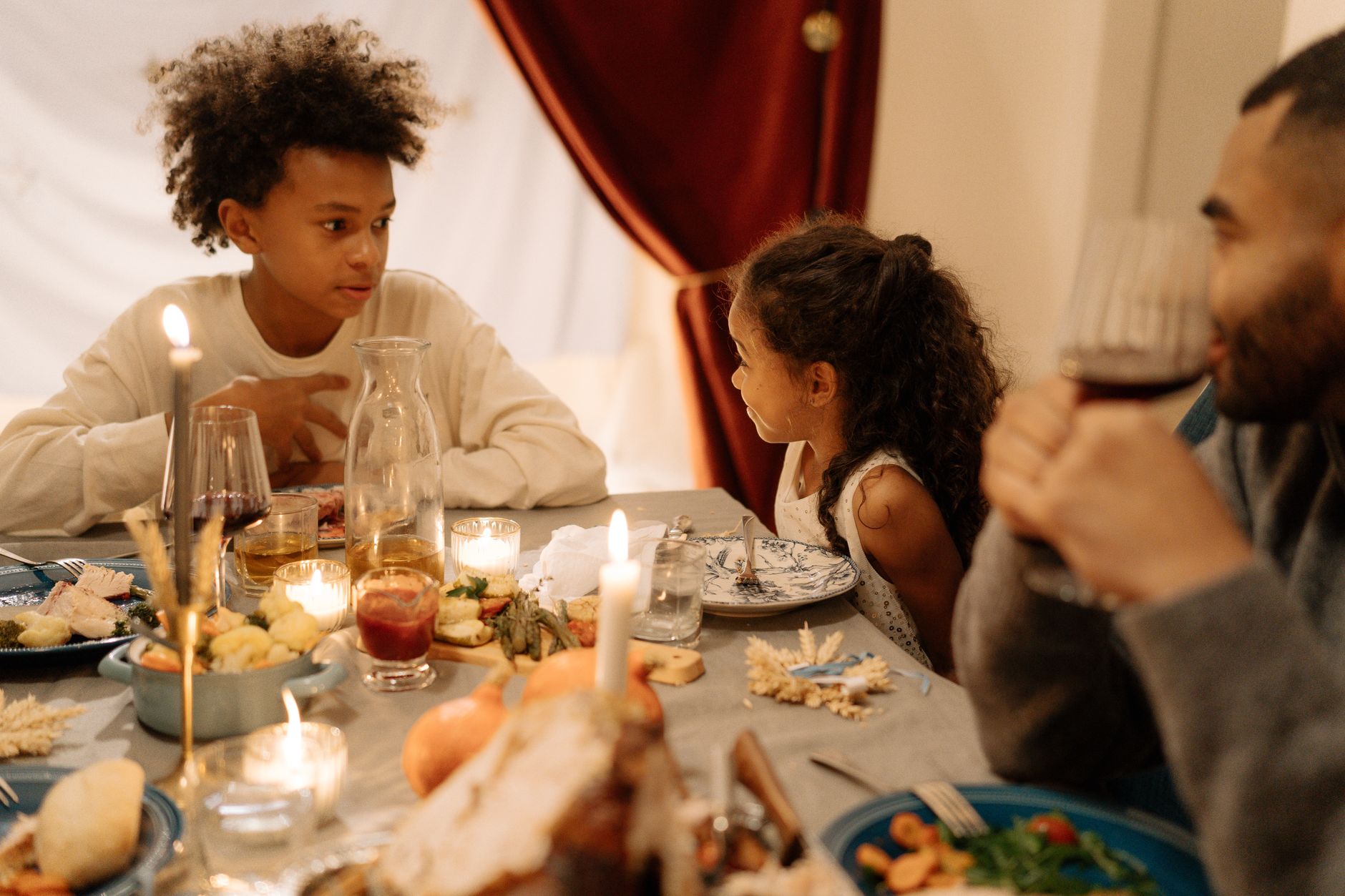
Photo: cottonbro studio / Pexels
This list is for the adult child who wants your parents talking about their lives at Thanksgiving, beyond who needs more gravy. Pick three or four questions, not twenty. Ask the easy ones at the table, move to growing up and work as the plates clear, and save one deep question for a quiet moment. Any question can be skipped.
Questions 8, 9 and 20 are sample questions from a Library of Congress family-stories activity. The follow-up prompts are ours.
Easy questions for the table
These are written for a full table, including kids and in-laws. Each one has a short answer and room for a longer story.
- What's the best Thanksgiving you remember? Follow up with "What made it good?" and let the answer run.
- Which dish would it not be Thanksgiving without? Ask who made it first and where the recipe came from.
- What's one tradition you'd add if you could? This gives your parents a say in the day instead of just a place at it.
- What song takes you right back to a good time? Play it from a phone if someone has it.
- What's something you cook that you're proud of? Ask for the trick that isn't in the recipe.
- What's the best trip you ever took? Let a grandchild ask the follow-up about where they'd go next.
Questions about growing up and work
Try these once dinner slows down. They fit one or two listeners better than a crowded table.
- What was your street like when you were growing up? Ask who lived next door and where kids played.
- What were your parents like? Ask for one moment that shows it, such as a saying or a habit.
- How did you choose my name? Your kids can ask their own version.
- What did you want to be when you were ten? Ask how close it came.
- What was your first paid job, and what did it pay? Ask what they spent the first paycheck on.
- What's the best thing a boss or coworker ever taught you? Ask what they still do because of it.
- How did you two meet? Ask each parent separately, so each can tell it their own way.
Deeper questions for a quiet moment
Try these one-on-one, such as on a walk, over the dishes or on the drive home. If your parent gives a short answer, leave it there.
- What was the hardest year you remember, and what got you through it? Ask only if the mood feels right, and thank them for answering.
- What are you proud of that nobody ever asked about? This hands your parent the lead.
- What do you wish you'd known at my age? Ask it as the adult child, and listen without correcting.
- Is there a family story you'd want the grandkids to know? It gives your parent a job in passing it on.
- What are you looking forward to this coming year? It points the conversation ahead.
- What's something you still want to do? Write the answer down, since it can turn into a plan.
- How would you like to be remembered? This one may suit your quietest setting. Ask it when you have time to sit with the answer.
If an answer turns toward future care, you don't have to solve it on the spot. How to start the conversation about care covers that talk separately.
How to use the list on the day
Who asks. One option is to let a teenager or older grandchild take the easy questions, which can feel more like curiosity than an interview. Pick one adult to hold the deep question and ask it privately.
When to stop. Stop when your parent passes, changes the subject or looks tired. Try keeping to one or two stories per sitting, and treat a skipped question as an answer.
Add a pass rule. Say up front that anyone can say "pass" on any question. That includes you.
If you're the only one there, or no one is nearby. Pick two questions and ask them one at a time. If you can't be there, try them on a call the day after Thanksgiving. Our video call setup guide can help make that easy.
Recording the answers
Ask permission before you press record, and tell your parent what the recording is for. The voice memo app already on your phone is enough to start.
Put the phone on the table, ask your question, then stay quiet and let the answer run. If your parent would rather not be recorded, a notebook and a pen do the job.
Example: three questions on the cards
An illustrative example: here is how the Thanksgiving question cards might look filled in for a made-up family, with a teenage grandchild, an adult daughter and her parents.
| Who asks | When | Question | What gets written on the card |
|---|---|---|---|
| Teenage grandchild | Over dinner | 2. Which dish would it not be Thanksgiving without? | "Grandma's cornbread stuffing. She learned it from her aunt." |
| Teenage grandchild | While dessert is served | 11. What was your first paid job? | "Grandpa: paper route, 50 cents a week. Told it twice." |
| Adult daughter | In the car on the drive home | 20. How would you like to be remembered? | Kept private. One line copied down later, with permission. |
The grandchild takes the two easy ones with everyone listening. The daughter asks the deep one only when it's just the two of them in the car.
Next step
Print the Thanksgiving question cards and choose three questions: one easy, one about growing up and one deep. Put the cards on the table before the meal. If you want a longer project afterward, the Interview your grandparent sheet picks up where these questions leave off.
Sources used for this list
- Preserving Family Stories · Library of Congress (Minerva's Kaleidoscope blog) · checked Oct 26, 2026Primary source
Spotted a mistake or a source we should look at? Tell us.
What to do next

Where to get help
- AARP family caregiving · AARP
A caregiving phone line plus online and Facebook communities. You don't need to be a member.
- National Family Caregivers Month · Caregiver Action Network
November's national campaign for family caregivers.