How to thank people who help with Mom, without sounding stiff
Fill-in notes and texts for siblings, neighbors, drivers, teens and spouses, a stiff-versus-warm example, and a 15-minute routine to get them sent.

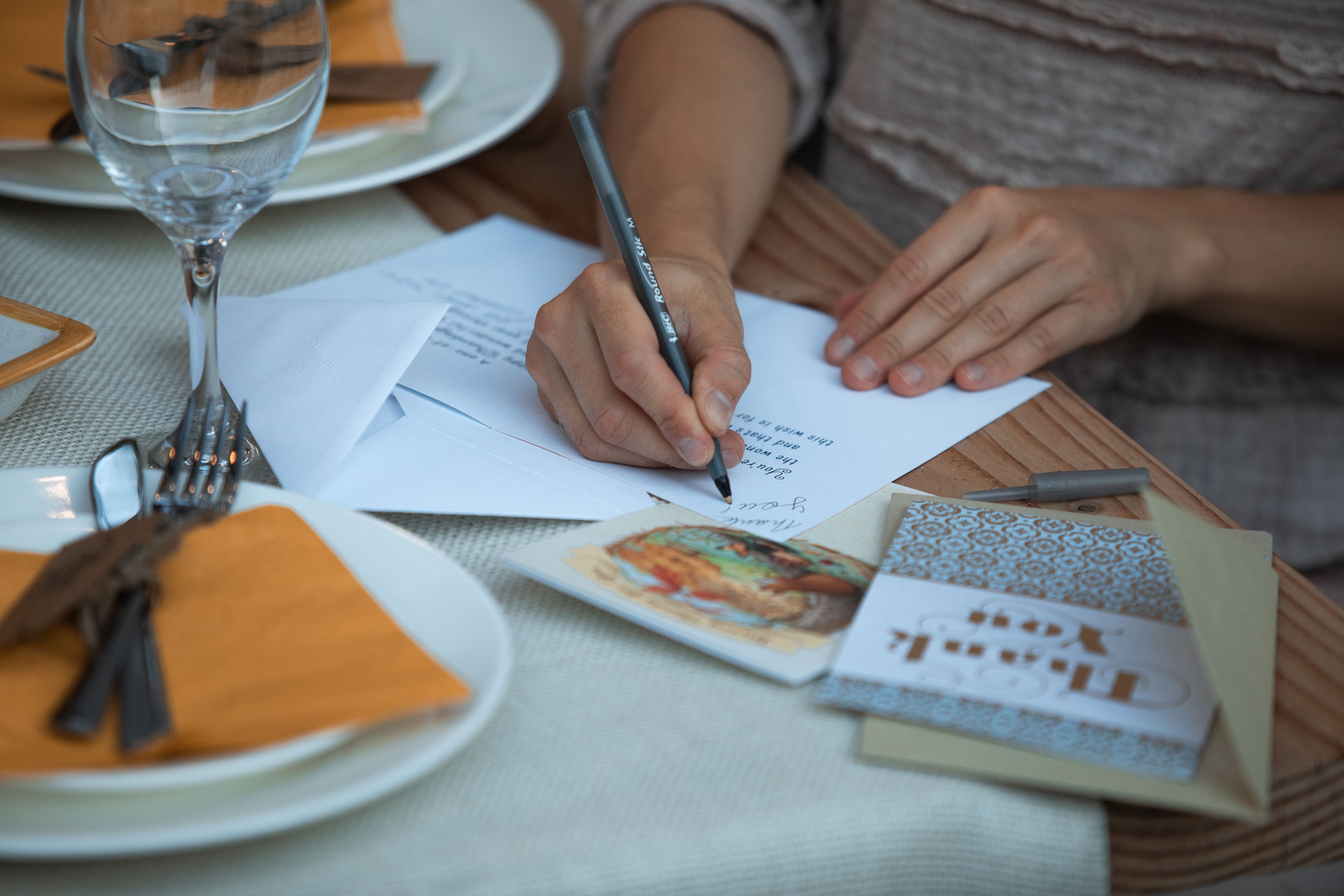
Photo: RDNE Stock project / Pexels
The short answer: name the thing, then name what it made possible
A thank-you that doesn't sound like a form letter has two parts: what the person did, and what it made possible for you or your mom. Leave out the apology for being slow, and leave out any new request. A text is fine; it doesn't have to be a card.
Made-up example: Thank you for driving Mom to her Thursday appointment. It meant I got through a work day without watching the clock.
The rest of this guide gives you a before-and-after, fill-in versions for six kinds of helpers, a 15-minute routine to send them, and a few low-cost gestures.
Why a specific thank-you is worth the few minutes
A thank-you isn't a burden on the person who helped. Many people want to help, and it makes them feel good to contribute, the National Institute on Aging reminds caregivers. People feel good when they do something nice for someone else, the Family Caregiver Alliance says too.
A specific note shows a helper where their effort landed. "Thanks for everything" doesn't do that. "Thanks for taking the Sunday visit" does.
You also don't owe anyone a big gesture. You don't need to feel indebted to those who help, and your sincere appreciation is thanks enough, according to the same Family Caregiver Alliance page.
Who to thank this month: a quick list
Grab a sheet of paper or open your notes app. Write down every person who did something for your mom or for you in the last 30 days. Then add three things next to each name:
- What they did, in plain words (drove, called, brought food, covered school pickup).
- What it freed up (your Saturday, an hour of sleep, a calmer Mom).
- How they'd like to hear it (text, call, card, a note passed along in person).
If you already use a shared online calendar where people schedule regular help, as the CDC suggests caregivers start, scroll back through the month. It doubles as your thank-you list. If you don't, the Weekly care plan gives you one place to see who did what.
If you're the only helper, or no one lives nearby, your list may be one or two names. That's fine. The note to yourself at the end matters even more.
Fill-in notes and texts for six kinds of helpers
First, the difference between stiff and warm. These are made-up examples.
| Stiff | Warmer |
|---|---|
| "Dear Karen, thank you so much for all your help with Mom. It is much appreciated. Sorry it took me so long to write." | "Karen, thank you for bringing Mom soup on Tuesday and staying for tea. She talked about it that evening, and it meant I could stay late at work without worrying." |
The warmer one names a day, a thing and what it freed up. It skips the apology.
Now the templates. Replace everything in brackets. Only include a detail if it's true. Delete the bracket if you can't fill it honestly.
A sibling
[Name], thank you for [taking the Sunday visits this month]. Because you did, I [had Sundays with the kids]. It didn't go unnoticed, and I'm grateful.
Keep the thanks separate from any scheduling talk. If you also need to ask for something, send that as its own message.
A neighbor
[Name], thank you for [bringing in Mom's bins / waving over every morning]. It helps me to know someone friendly is close by. [Optional: Mom mentioned you, and she smiled.]
A friend who drives
[Name], thank you for [driving Mom to her Thursday hair appointment]. [One true detail, like: she's always ready early on Thursdays.] There's no way I could have fit that into my week.
A teen grandchild
Hey [name], thanks for [sitting with Grandma on Saturday / setting up her tablet]. [One thing you noticed, like: she laughed a lot.] It mattered to both of us.
Keep it short and don't turn it into a lecture on responsibility. For ideas on roles that fit teens, see involving teens in a grandparent's care.
A spouse or partner
[Name], thank you for [covering school pickup / handling dinner] so I could be at Mom's. It was extra on top of your own week, and I see it.
A relative far away who helps from a distance
[Name], thank you for [calling Mom every Wednesday / sorting the insurance mail online]. Even from [city], it takes a real load off.
If your mom wants to add a line or sign a card, offer. Don't push. A thank-you in her own words can mean a lot, but only if it's hers.
A 15-minute thank-you routine
You only need 15 minutes, once a week or once a month.
- Minutes 1–3: Pick three names from your list.
- Minutes 4–11: Paste the matching template into a text or card. Fill in the brackets. Read it once for anything that sounds like the stiff column above, and swap in your own words.
- Minutes 12–15: Send the texts. Put cards in the mail or by the door. Cross the names off.
One option is to put it on the calendar right after your weekly family check-in, if you have one, so it's easier to remember.
Small gestures that don't cost much
Little remembrances such as flowers or sweets let people know you care, notes the Family Caregiver Alliance. A few more ideas of your own to try:
- A plate of something homemade or store-bought, dropped off with a short note.
- A card signed by your mom, if she'd like to.
- A printed photo of the helper with your mom, if both are happy to have it taken.
- A thank-you in the family group thread, but only if the helper won't mind being named in front of everyone.
None of these is required. A sincere note is enough.
Don't forget to be thanked, too: a note to yourself
Unpaid family and friend caregivers are the backbone of long-term care provided in people's homes, says the CDC. So give yourself credit for everything you're doing, as the National Institute on Aging puts it.
Try finishing these three lines once a month:
This month I [did]. It cost me [time / sleep / a weekend]. One thing I'd like someone to notice is [ ].
Then share that last line with someone, if you can.
Your next step: pick three names from this month, copy the matching template, and send them today.
Sources used for this guide
- Healthy Habits: Caring for Yourself When Caring for Another · Centers for Disease Control and Prevention · checked Oct 19, 2026Primary source
- Taking Care of Yourself: Tips for Caregivers · National Institute on Aging (NIH) · checked Oct 19, 2026Primary source
- Saying 'Yes' to Offers of Help · Family Caregiver Alliance · checked Oct 19, 2026
Spotted a mistake or a source we should look at? Tell us.
What to do next
Where to get help
- AARP family caregiving · AARP
A caregiving phone line plus online and Facebook communities. You don't need to be a member.
- Caregiving (National Institute on Aging) · National Institute on Aging
Plain-language caregiving guides from the federal research institute on aging.
- Eldercare Locator · Administration for Community Living
The front door to local aging services, through your parent's Area Agency on Aging.