
How to record family recipes with Grandma, stories included
Save a grandparent's recipe and its story: fill in a recipe card together, measure every "pinch," then film a 10-minute phone video. Includes questions and an example.

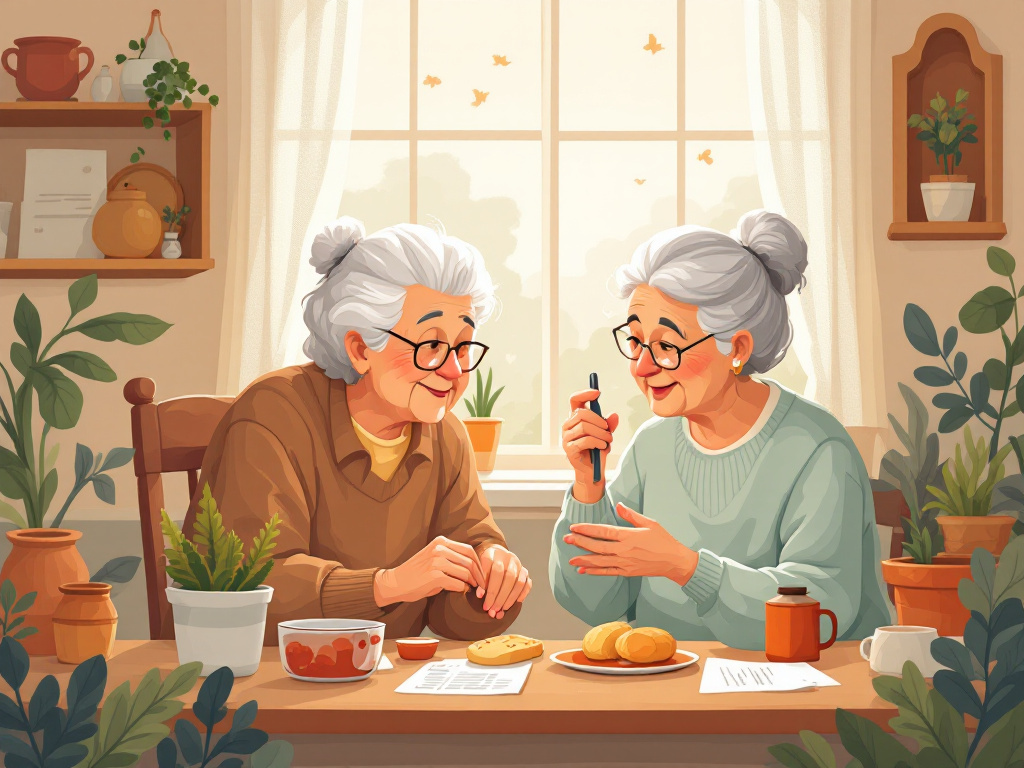
CasaLore / fal.ai (Flux 1.1 Pro)
The short answer: how to record family recipes with grandparents
Pick one recipe. Sit down with Grandma and fill in a family recipe card together, including its "story behind it" box. Ask her to put each "pinch" or "handful" into a measuring spoon or cup before it goes in the bowl. Then film her making the dish, about 10 minutes of phone video. Split the work three ways: one person cooks beside her, one films, one writes down what she says. Keep the card and the video in two places each, so the only copy isn't in one drawer or one phone.
Pick the one recipe to save first
Start with one dish, not the whole recipe box. Ask Grandma: "If we could only save one dish, which would you pick?" Her answer beats your guess. A dish she makes without looking anything up is a good choice, because that is where the by-eye measurements live. If a holiday is a few weeks away, you could plan one dish per weekend, but one finished card is a good start.
The Library of Congress notes that foodways traditions can encompass recipes passed down within families, and it links food and shared meals to traditions such as storytelling. So ask for the story along with the ingredients.
Next, split the work so it doesn't land on one person. Here are three jobs to hand out:
- Cook-with: stands beside Grandma, asks the questions and keeps her talking.
- Camera: films and stays quiet.
- Card writer: fills in the card using her exact words.
A message you can copy into the family chat:
"We're filming Grandma making her cornbread on Saturday at 2. Can you take one job: cook beside her, film, or write the card? Reply with your pick by Thursday."
If you're the only helper, do all three jobs in turn: prop the phone against a canister, and fill in the card afterward from the video. If you live far away, ask Grandma whether she'd cook during a video call and be okay with you recording it, or ask a relative nearby to be the camera while you ask the questions on the call.
Turn "a pinch" into measurements
Old recipes, and ones that were never written down, don't always meet modern expectations for measurements or cooking temperatures, according to the Library of Congress. You can close that gap one ingredient at a time:
- Before each "pinch," "handful" or "splash," ask Grandma to put it in a measuring spoon or cup first.
- Read the amount aloud so the video catches it.
- Then it goes in the bowl, and she carries on.
- For "until it looks right," note the amount at that moment and write the cue in her words.
- If the amount changes from batch to batch, write a range.
Copy this table onto paper, one sheet per dish:
| Ingredient | Her words | Measured amount | How she knows it's right |
|---|---|---|---|
Also write down the oven setting and cooking time exactly as she uses them. Treat each measurement as a starting point, and add "adjust to taste" where she would.
Fill in the recipe card together
Use the family recipe card and write in Grandma's words first, then the measured version from your worksheet.
Example family (illustrative, all details invented): you're saving Grandma's cornbread. She doesn't use a written recipe, so the card holds her words first and a measured version second.
| Card box | What you'd write (invented) |
|---|---|
| Dish | Grandma's cornbread |
| Her measurements, in her words | A heaping handful of cornmeal. A good splash of buttermilk, until it looks like thick pancake batter. Two big pinches of salt. |
| Measured version | You tip Grandma's handful into a measuring cup on camera: about ½ cup of cornmeal. She adds three handfuls in all. |
| How she knows it's done | The edges pull away from the pan and the kitchen smells toasty |
| Who taught her | Her aunt, who made it most Sundays and never wrote it down |
| First on the table | Thanksgiving 1962, the first year Grandma hosted |
| The story behind it | Learned by standing next to her aunt at the stove. She made it the first year she hosted, and it has been on the table every Thanksgiving since. |
| Who has a copy | You, your uncle, the cousins' shared folder |
The "first on the table" line takes one question to fill in, and it gives the dish a date everyone can place.
The story behind it: questions to ask
Keep each question short and skip any that can be answered with yes or no, as the Library of Congress family stories guide advises. The same guide says to encourage the speaker without interrupting, so let Grandma finish, even if she wanders.
Here are seven questions to ask while she cooks. Pick the ones that fit:
- Who showed you how to make this?
- What do you remember about the first time you made it?
- When did it first show up at the family table?
- Where did you get the ingredients back then?
- What was your kitchen like when you started?
- What do you do differently from the way you were taught?
- Who in the family always asks for it?
If she says she doesn't remember something, move on to the next question. For more prompts you can use at the table, see getting your parent and kids talking at Thanksgiving.
Ask before you share the video beyond the family. Some stories are hers to decide about.
How to record family recipes on a phone in 10 minutes
The Library of Congress guide lists a mobile device as one way to record, and says to test your equipment and select a quiet location.
Our own suggestion for a kitchen: turn off the TV and radio before you start, and film a 20-second test clip to check that her voice comes through. Tell Grandma what you're recording and why, and that you'll stop whenever she asks. If she'd rather not be filmed, skip the video and keep the card and your notes.
One way to spend the 10 minutes, with the phone held sideways:
- Minute 0–1: Grandma says the dish, the date and who is in the room.
- Minute 1–2: Film the ingredients lined up on the counter, then the pan or dish she'll use.
- Minute 2–8: Film her hands and the bowl. Have her say each amount out loud, and film the measuring cup when you convert her handful. Ask two or three of the story questions in between steps.
- Minute 8–10: Film the finished dish, then ask: "What should the family know about this one?"
The camera person can stay out of the conversation. The cook-with person asks and listens. Anything you miss can go on the card afterward, so don't stop her mid-step to redo a take.
Keeping and sharing the copies
If Grandma already has recipes on old index cards, the Library of Congress suggests you take pictures of them. Keep the photo of her handwritten card next to your new one.
The National Archives says to use scans to share information with other family members and to have relatives keep backup copies. That advice is about family documents in general. Applying it to a recipe card is our suggestion: scan the finished card, send the scan around, and ask a few relatives to keep a copy. If you want to scan more family papers while you're at it, the weekend photo project walks through it.
For paper originals, the Archives says cool and dry conditions are best and to avoid hot attics, damp basements and garages. It also suggests displaying a copy rather than the original, so hang a printed copy in the kitchen and keep the original card put away.
The video is our own suggestion, since the Archives page covers paper and scans. Upload it to one shared album or folder, name the file something findable, like "Grandma – cornbread – filmed [month, year]," and keep a second copy on a drive or in a second account.
Once you have a few cards, the Library of Congress blog suggests a homemade family recipe book as a holiday gift and a way to keep family history. Put each card in the same layout with a photo of the finished dish, print a copy for each household, and give Grandma the first one.
Then post the link wherever your family already gets news about Grandma; one place for family updates covers how to set that up.
Today's next step: text Grandma or the family chat and ask which dish she'd pick first.
Sources used for this guide
- How To Collect Family Recipes: Inspiration From The Library's Cookbook Collection · Library of Congress (Minerva's Kaleidoscope blog)Primary source
- Introduction - Foodways: Resources in the American Folklife Center · Library of Congress, American Folklife Center · checked Oct 26, 2026Primary source
- Treating Memories as Documents · U.S. National Archives and Records Administration · checked Oct 26, 2026Primary source
- Preserving Family Stories · Library of Congress · checked Oct 26, 2026Primary source
Spotted a mistake or a source we should look at? Tell us.
What to do next
Where to get help
- AARP family caregiving · AARP
A caregiving phone line plus online and Facebook communities. You don't need to be a member.
- National Family Caregivers Month · Caregiver Action Network
November's national campaign for family caregivers.